As fruit ripens, the flesh softens, sugars rise and acids fall. Fruit scientists measure that softening with a firmness tester; at home, a gentle press in the right place does the same job.
Pick a fruit to see what ready feels like. The bar shows how much give to expect when it is ready to eat.
Based on RHS harvesting and storage advice and UC Davis postharvest guidance on kiwifruit.
TWO NUMBERS WORTH KNOWING
Softening can be measured.
One figure on how much fruit softens, one on how much warmth speeds it up.
2–4 lb-force
Flesh firmness when ready to eat
A mature kiwifruit is harvested hard, at 12–16 pounds-force. It is considered ripe, or ready to eat, at 2–4 pounds-force, the point of its best eating.
KIWIFRUIT · UC DAVIS
≈ 3× faster
Softening at 20°C vs 0°C
After ethylene treatment, kiwifruit softened by 1.2 pounds-force a day at 0°C but 3.4–3.7 a day at 20°C, in the UC Davis table.
WARMTH · UC DAVIS
The University of Maryland Extension explains why: fruits such as apples, peaches, bananas and avocados make a burst of ethylene as they ripen, and that ethylene triggers more of itself.
FOUR HABITS TO TRY
Ripe when you want it.
None of these needs a gadget. They use the fridge, the worktop and a little patience to get fruit ready on the day you want to eat it.
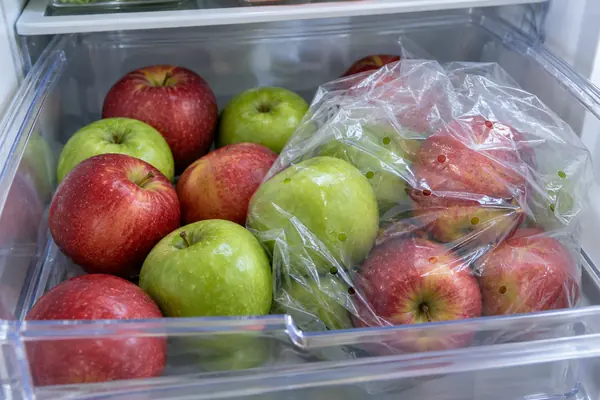
Apples and berries in the fridge
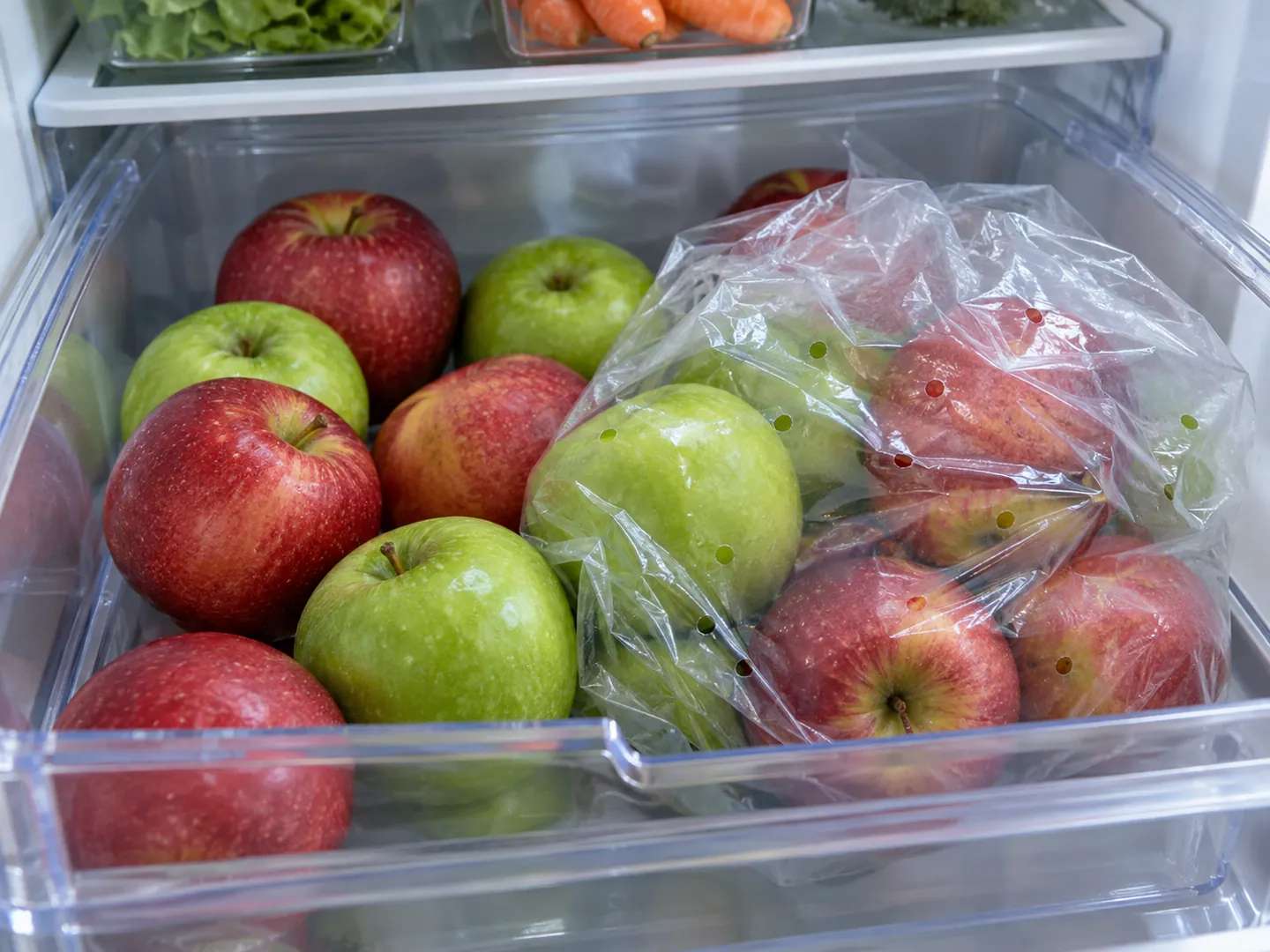
Love Food Hate Waste says apples, berries and citrus last longer in a fridge set between 0 and 5°C.
Bananas out of the fridge
Keep bananas somewhere cool, in a cupboard or on the side. In the fridge their skins go black.
Bananas away from the bowl
Bananas can make other fruit ripen too quickly, so give them their own spot.
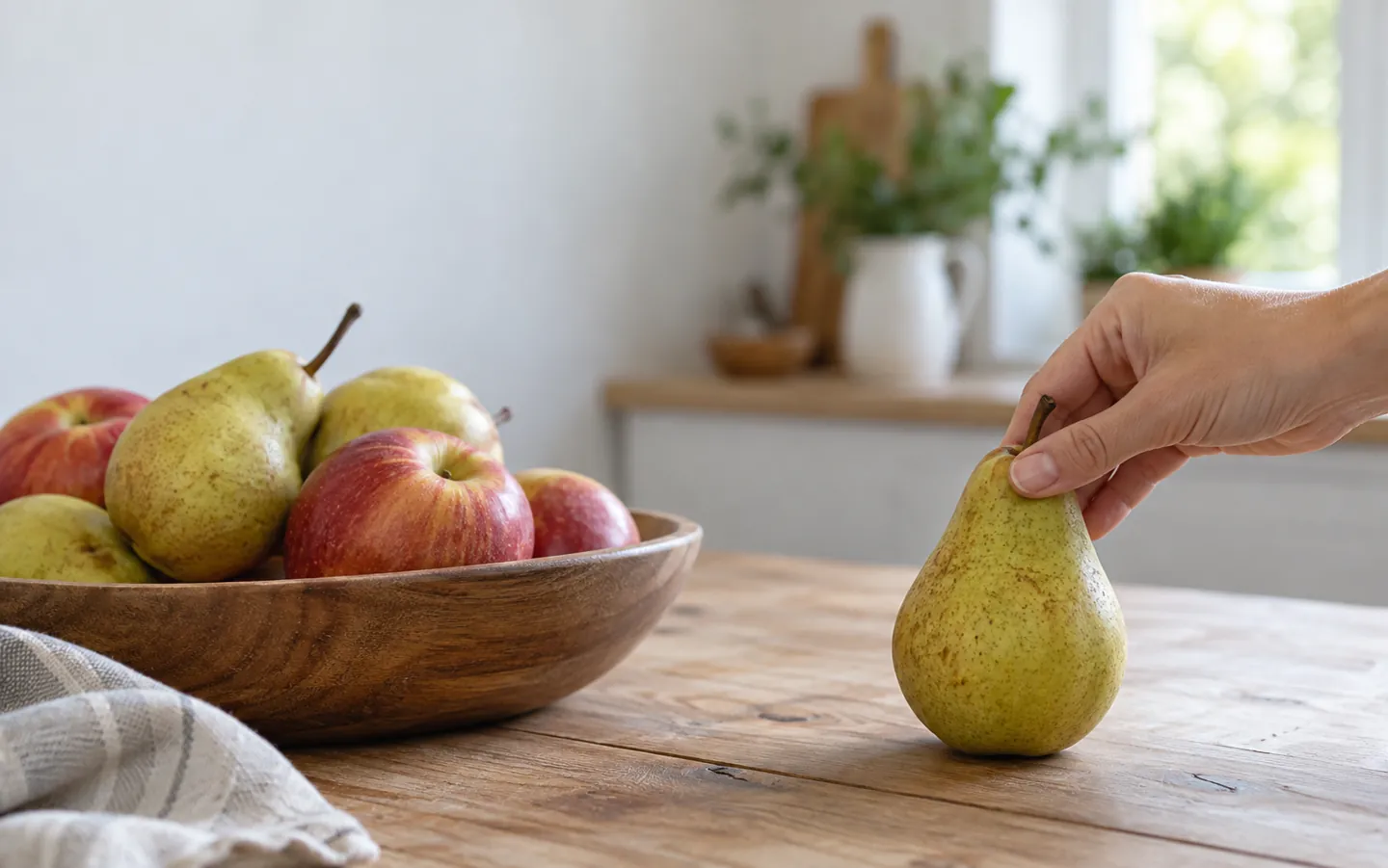
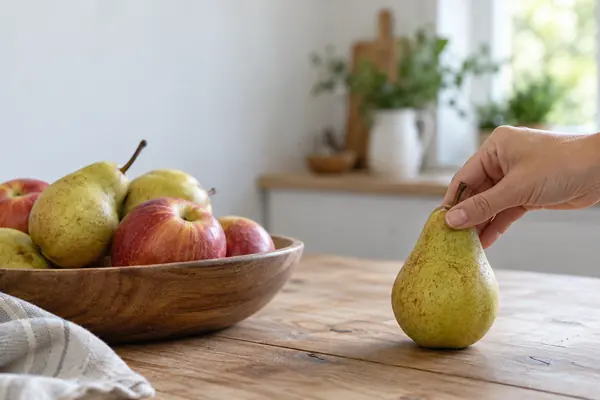
Ripen pears on the side
Bring firm pears into the warm for a day or two to soften, and check them daily.
AI-generated image, not a photograph of a real person or place.AI-generated image, not a photograph of a real person or place.
AFTER THE PICK
Not every fruit keeps ripening.
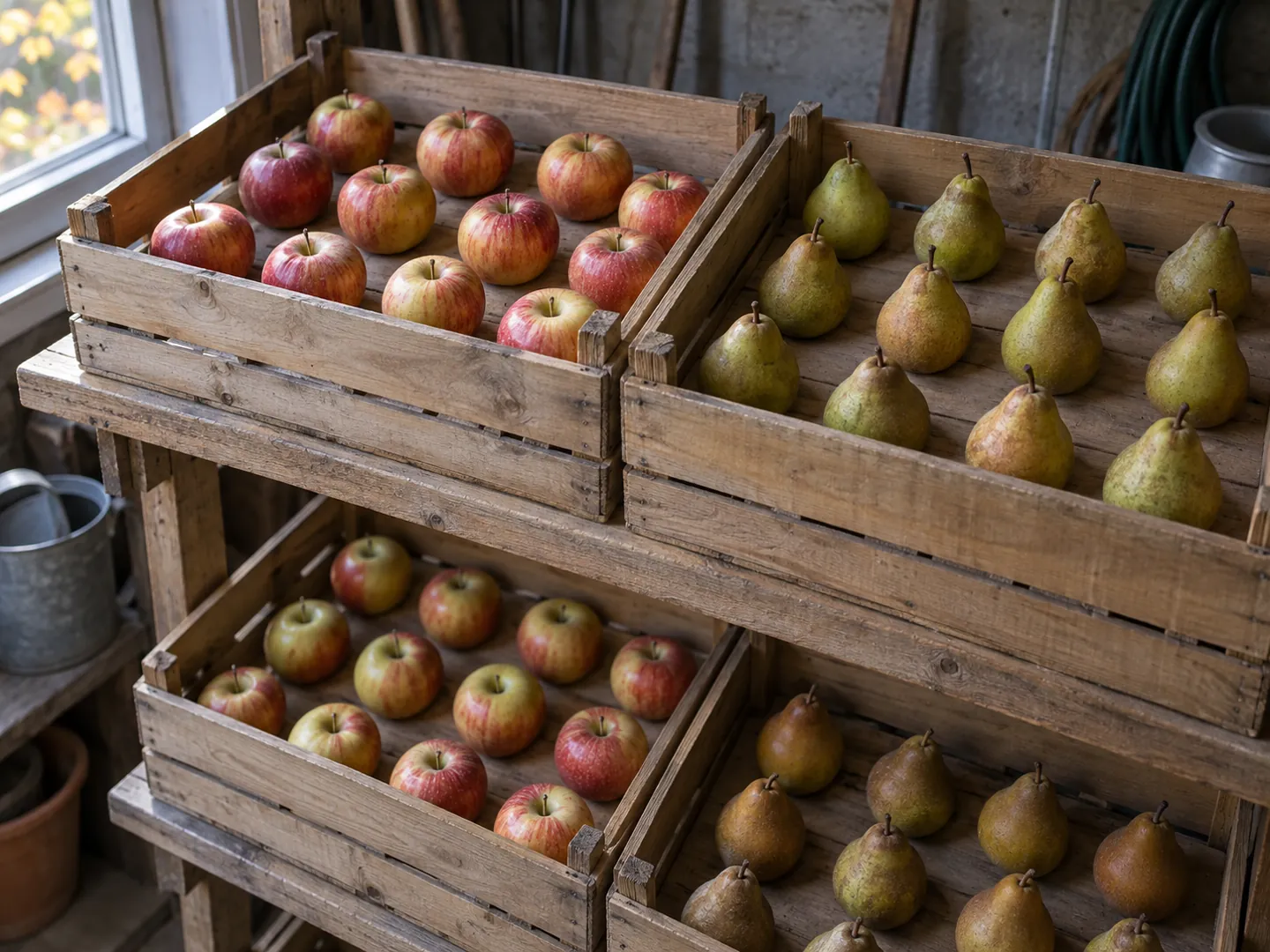
Fruit scientists split fruit into two groups. Climacteric fruits, such as apples, pears, peaches, bananas and avocados, can carry on ripening after harvest, driven by their own ethylene.
Non-climacteric fruits, such as cherries, grapes, strawberries and blueberries, have no ethylene burst and need to be picked fully ripe. Leaving them on the worktop will not make them sweeter.
Questions
Questions people ask
Why do fruits go soft as they ripen?
Ripening is a set of changes: the flesh softens, sugar rises, acids fall and aroma develops. The University of Maryland Extension describes ethylene, a gaseous plant hormone, as an important trigger for these changes in many fruits.
Which fruits ripen after they are picked?
Climacteric fruits such as apples, peaches, bananas and avocados can ripen after harvest. Non-climacteric fruits such as cherries, grapes, strawberries and blueberries cannot, so they are picked when fully ripe.
How do I know a pear is ripe?
Press gently and look for a slight softness, especially around the stalk. The RHS says pears can pass their best quickly, so check them every day.
Should apples go in the fridge?
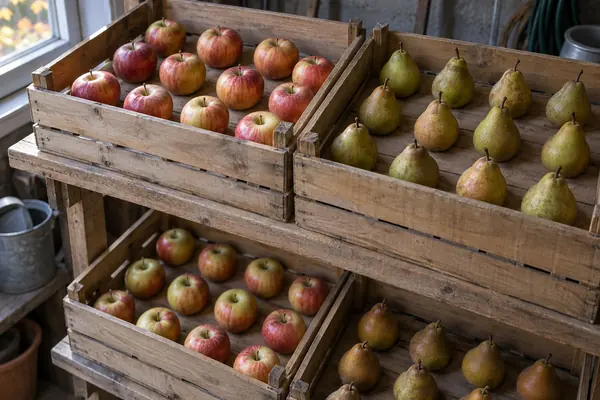
Love Food Hate Waste says to store apples in the fridge, where they last longer than in a fruit bowl. The RHS adds that apples will not withstand temperatures below 2.8°C in store.
Why keep bananas away from other fruit?
Ripening fruit gives off ethylene, which can speed up ripening of fruit nearby. Love Food Hate Waste says bananas can cause other fruits to ripen too quickly.